History, Science and How All Roads Lead to North America in Fourth Grade
We have begun The Story of the World, Volume 3, by Susan Wise Bauer. We find ourselves in the age of discovery. Columbus sails to the new world, the Dutch have well established trading routes, and as time passes, the new world is settled by adventurers, gold-diggers and pilgrims. In addition to the history book, I enjoy reading aloud stories that build on the time-period. So far we've enjoyed, Pocahontas and the Strangers, and Squanto, Friend of the Pilgrims, by Clyde Robert Bulla and Captured by the Mohawks, by Sterling North.
The children remember visiting Jamestown last summer, so they have a little bit of a background for understanding Pocahontas' story. They are beginning to understand that there were many different tribes of native Americans and that Squanto and Pocahontas were contemporaries, but not part of the same tribe, nor did they live close to one another.
Captured by the Mohawks is the rather intense retelling of the adventures of a French American boy, Pierre Raddison Espirit. Sterling North remains true to Radisson's adventures among the Mohawk Indians and the Iroquois tribes. He includes quotes from the young Radisson's journal entries. I could do without the scalping and violence, but I guess it is true to history. The kids were excited that North refers to New York city as New Amsterdam, and mentions the last Dutch governor of the city, Stuyvesant. This reinforces what they learned from Susan Wise Buaer in The Story of the World.
We are working our way through Apologia's Land Animals of the Sixth Day. Tristan is using the regular Notebooking Journal and Anastasia is using the junior Notebooking Journal. These journals are tremendous! The kids are able to build on the concepts learned in the textbook by notetaking, cut-outs, mini-books, vocabulary crosswords and more. If you are considering using the Apologia science books, I highly recommend the journals as well.
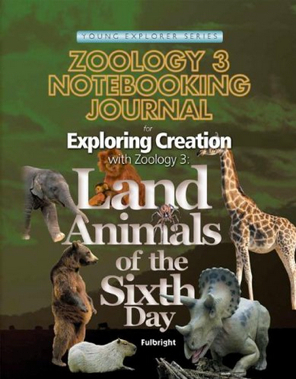
The notebooks also contain suggestions for additional reading and study for each chapter and we try to read as many of these additional resources as we can get our hands on. We recently enjoyed a handful of books about rodents, namely Beavers. We were able to visit our local state park and see an active beaver lodge up close. Hopefully we can spot a resident beaver sometime soon. We just need to make a few early morning or evening outings. I'll keep you posted!
After enjoying the Institute for Excellence in Writing lessons for the Middle Ages, I decided to continue with the IEW curriculum. We are using the Geography Based Writing Lessons. The Holling Clancy Holling books are so rich and the writing exercises are much less challenging in this lesson guide. We are reading and beginning to write about Paddle to the Sea, by Holling Clancy Holling. This is the story of a little Canadian-made canoe-man riding the waterways from Lake Superior out the sea. Here again, this story takes place at the same location as our history lessons and the animals in the book are the same that we've been learning about in Science. And this is how all roads lead to North America in the fourth grade!

The children remember visiting Jamestown last summer, so they have a little bit of a background for understanding Pocahontas' story. They are beginning to understand that there were many different tribes of native Americans and that Squanto and Pocahontas were contemporaries, but not part of the same tribe, nor did they live close to one another.
Captured by the Mohawks is the rather intense retelling of the adventures of a French American boy, Pierre Raddison Espirit. Sterling North remains true to Radisson's adventures among the Mohawk Indians and the Iroquois tribes. He includes quotes from the young Radisson's journal entries. I could do without the scalping and violence, but I guess it is true to history. The kids were excited that North refers to New York city as New Amsterdam, and mentions the last Dutch governor of the city, Stuyvesant. This reinforces what they learned from Susan Wise Buaer in The Story of the World.
We are working our way through Apologia's Land Animals of the Sixth Day. Tristan is using the regular Notebooking Journal and Anastasia is using the junior Notebooking Journal. These journals are tremendous! The kids are able to build on the concepts learned in the textbook by notetaking, cut-outs, mini-books, vocabulary crosswords and more. If you are considering using the Apologia science books, I highly recommend the journals as well.
The notebooks also contain suggestions for additional reading and study for each chapter and we try to read as many of these additional resources as we can get our hands on. We recently enjoyed a handful of books about rodents, namely Beavers. We were able to visit our local state park and see an active beaver lodge up close. Hopefully we can spot a resident beaver sometime soon. We just need to make a few early morning or evening outings. I'll keep you posted!
After enjoying the Institute for Excellence in Writing lessons for the Middle Ages, I decided to continue with the IEW curriculum. We are using the Geography Based Writing Lessons. The Holling Clancy Holling books are so rich and the writing exercises are much less challenging in this lesson guide. We are reading and beginning to write about Paddle to the Sea, by Holling Clancy Holling. This is the story of a little Canadian-made canoe-man riding the waterways from Lake Superior out the sea. Here again, this story takes place at the same location as our history lessons and the animals in the book are the same that we've been learning about in Science. And this is how all roads lead to North America in the fourth grade!


Comments